Adventist Vegetarian Diabetics™
“Prove all things; hold fast that which is good.”
https://adventistvegetariandiabetics.com/
Adventist Vegetarian Diabetics™ recommends eating whole foods that are unprocessed (or minimally processed) and in as close as possible to their natural state.
If it comes in a can, box, bottle, jar, or bag, it is probably processed. If it has a label, it should show ingredients and nutrition information. Learn to read these labels carefully and meaningfully! Note particularly the serving size and determine how many servings you are going to have.
This list shows a typical serving size and grams of total carbs in that size serving. Any serving more than 5 grams total carbs is not “keto-friendly” but may be suitable for low-carb or moderate-carb dietary protocols.
Search the USDA FoodData Central (https://fdc.nal.usda.gov/) to find information about other macronutrients and micronutrients of the foods shown in this list. Or use a mainstream database like CalorieKing.com or MyFitnessPal.
Vegetables
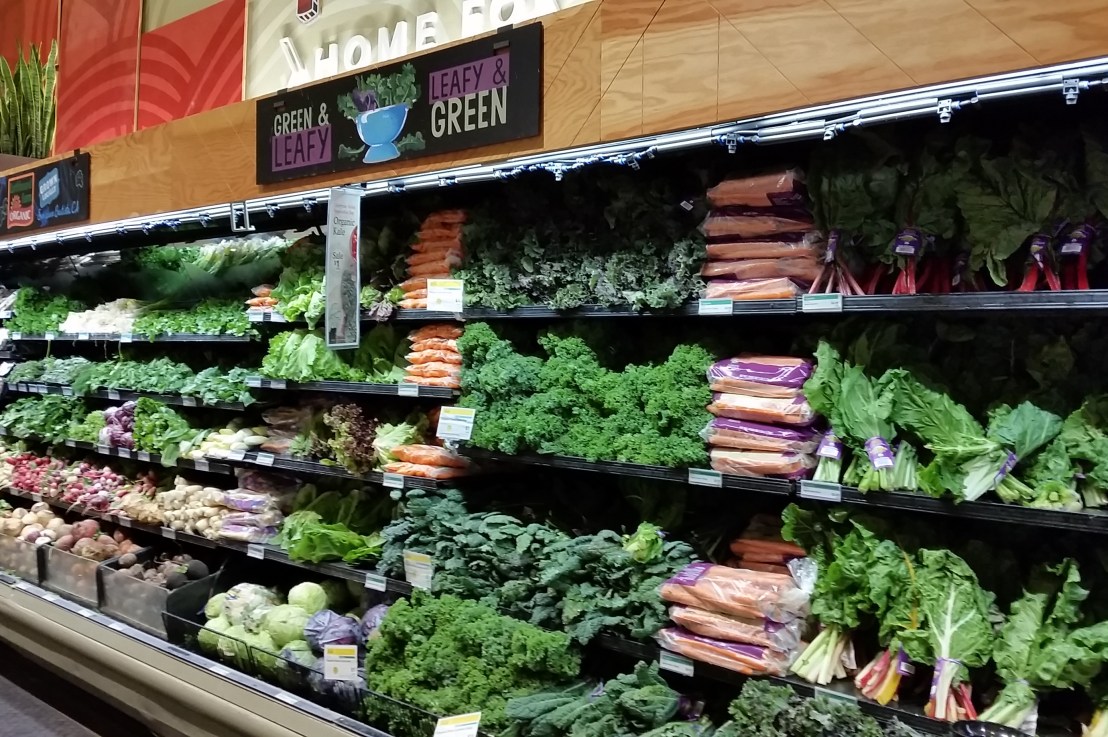
Low-carb, non-starchy vegetables should be the foundation of any diabetic’s dietary protocol!
- Alfalfa sprouts – 1 cup, 1.2g total carbs
- Arugula (rocket) – 1 cup, 0.7g total carbs
- Artichokes – ½ medium, 6.5g total carbs
- Asparagus – ½ cup, 3.7g total carbs
- Baby corn, canned (NOT mature corn!) – 13 pieces, 7.0g total carbs
- Bamboo shoots – 1 cup, 4.3g total carbs
- Bean sprouts – 1 cup, 6.3g total carbs
- Beets – ½ cup, 6.0g total carbs
- Bok choy – 1 cup, 3.1g total carbs
- Broccoli – ½ cup, 5.6g total carbs
- Broccoli sprouts – 1 cup, 0.7g total carbs
- Brussels sprouts – ½ cup, 5.5g total carbs
- Cabbage (all varieties) – ½ cup, 3.6g total carbs
- Carrots – ½ cup, 6.0g total carbs
- Cauliflower – ½ cup, 2.5g total carbs
- Celery – ½ cup, 3.0g total carbs
- Celeriac (celery root) – ½ cup, 4.6g total carbs
- Chayote (Choko) – ½ cup, 4.1g total carbs
- Chicory greens – 1 cup, 1.4g total carbs
- Cucumber (without peel) – 1 cup, 2.6g total carbs
- Eggplant (aubergine) – ½ cup, 4.3g total carbs
- Endive – 1 cup, 0.8g total carbs
- Fennel, raw – 1 cup, 6.3g total carbs
- Garlic, raw – 1 clove, 1.0g total carbs
- Green beans (string beans) – ½ cup, 4.9g total carbs
- Greens (all varieties, including beet, chard, collards, kale, mustard, radish, spinach, and turnip) – average ½ cup, 3.7g total carbs
- Jicama – ½ cup, 4.4g total carbs
- Leeks – ½ cup, 1.0g total carbs
- Lettuce (all varieties) – average 1 cup, 1.2g total carbs
- Mushrooms – ½ cup, 4.1g total carbs
- Okra – ½ cup, 3.9g total carbs
- Onions – ¼ cup, 4.0g total carbs
- Parsley – 1 sprig, < 0.1g total carbs
- Peppers, green sweet – ½ cup, 3.5g total carbs
- Peppers, red sweet – ½ cup, 4.7g total carbs
- Pumpkin (puree) – ¼ cup, 5.0g total carbs
- Radicchio – 1 cup, 1.8g total carbs
- Radishes – 1 cup, 4.3g total carbs
- Rutabaga (swede) – ½ cup, 7.4g total carbs
- Scallions (spring onions) – ½ cup, 3.7g total carbs
- Shallots – 1 T. chopped, 1.7g total carbs
- Snow peas – 1 cup, 4.8g total carbs
- Spaghetti squash – ½ cup, 5.0g total carbs
- Spinach – 1 cup, 6.8g total carbs
- Sugar snap peas – 1 cup, 6.0g total carbs
- Summer squash – ⅓ cup, 3.0g total carbs
- Tomatoes – ½ cup (chopped or sliced), 3.5g total carbs
- Turnips – ½ cup, 3.9g total carbs
- Watercress – 1 cup, 0.4g total carbs
- Wax beans – ½ cup, 5.0g total carbs
- Zucchini (courgette) – ½ cup, 3.5g total carbs
Avoid starchy vegetables, such as potatoes (all varieties), winter squash, parsnips, etc. Use carrots and beets as garnishes rather than a whole side dish. Some may find that tomatoes and onions spike their blood sugar if used in too great a quantity.
Fruit
The best fruits for diabetics are avocados and olives! Next would be most berries, with their anti-oxidant properties and low-carb, to boot! With these and the other fruits listed here, portion size is critical.
- Avocado – ½ cup (cubed), 6.4g total carbs
- Black raspberries – ¼ cup, 4.0g total carbs
- Blackberries – ¼ cup, 3.7g total carbs
- Blueberries – ¼ cup, 5.4g total carbs
- Cranberries, unsweetened – ¼ cup, 3.0g total carbs
- Grapefruit (half) – ½ medium, 10.3g total carbs
- Lemon – 1 wedge, 0.7g total carbs
- Lime – 1 wedge, 0.9g total carbs
- Olives, ripe – 4 olives, 1.0g total carbs
- Raspberries – ¼ cup, 3.7g total carbs
- Rhubarb, unsweetened – ½ cup, 5.5g total carbs
- Strawberries – ¼ cup sliced, 3.7g total carbs
“Clean” Meat/Poultry/Fish
[Omit this section if you are vegetarian/vegan]
We suggest organic, grass-fed meats and cage-free, pasture-raised poultry. If you eat processed meat, such as beef, chicken, or turkey bacon, beef salami, beef pepperoni, beef, chicken, or turkey hot dogs, etc., try to get a brand/variety that is uncured (does not contain nitrites/nitrates). All meat/poultry/fish is 0 grams total carbs.
- Beef
- Bison
- Chicken
- Deer
- Duck*
- Goat
- Goose*
- Lamb
- Quail
- Turkey
- Veal
*Duck and goose are traditionally not eaten by Seventh-day Adventists, although they are permitted in Judaism.
We suggest wild-caught fish (not farmed).
- Anchovies
- Bass
- Cod
- Flounder
- Haddock
- Halibut
- Perch
- Pollock
- Salmon
- Sardines
- Snapper
- Trout
- Tuna
- Whitefish
If you buy canned fish or meat, be sure to read the label for ingredients. Choose a brand/variety that contains just the meat/fish and water or olive oil.
Dairy
[Omit this section if you are vegan, ovo-vegetarian, or lactose-intolerant]
Dairy milk is too high in sugar (lactose) for diabetics. However, we can eat full-fat dairy products, such as:
- Butter* – 0g total carbs
- Cheeses, natural** – read the label to find total carbs
- Cottage cheese (full-fat) – ½ cup, 5.0g total carbs
- Cream (heavy whipping cream) – 1 T., 1.0g total carbs
- Cream cheese – 2 T. (1 oz.), 2.0g total carbs
- Kefir (plain, unsweetened, homemade is best) – ½ cup, 6.0g total carbs
- Sour cream (Daisy® full-fat) – 2 T., 1.0g total carbs
- Yogurt, plain (especially whole milk Greek yogurt. Our favorite brands are unsweetened Siggi® and Total FAGE® 5%.)
*Vegans can buy vegan butter, usually made with coconut oil.
**Note that not all cheeses are vegetarian. For example, Parmesan cheese is usually made with animal rennet, though many brands in the United States use vegetable rennet.
We avoid dairy products labeled low-fat or fat-free, because typically when the producer takes out the fat, they add sugar to make it taste better! And totally avoid processed cheese-like products, such as Velveeta®, Kraft Singles®, Cheez Whiz®, etc.
If you would like to drink/use non-dairy milk, such as almond milk, coconut milk, hemp milk, etc., be sure to get the unsweetened variety. Check the label for the amount of total carbs/serving. Do not use oat milk or rice milk.
Eggs
[Omit this section if you are vegan or lacto-vegetarian.]
We recommend eggs from organic cage-free pasture-raised poultry. Eat the whole egg, not just the whites!
- Egg – 1 large, 0.6g total carbs
Healthy Fats
All healthy fats contain 0g total carbs and do not raise blood glucose.
- Avocado oil
- Butter*
- Coconut oil
- Extra virgin olive oil (in amber glass bottles)
- Ghee (clarified butter)
*Vegans can buy vegan butter, usually made with coconut oil.
Avoid margarine, shortening, and vegetable oils (including canola, corn, cottonseed, grapeseed, safflower, soybean, sunflower).
Grains (and grain-based foods)
Most grains (including whole grains) and cereals are too high in carbohydrates for diabetics. This includes breads, rice, oatmeal, Cream of Wheat®, pasta (all varieties), cakes, bagels, doughnuts, etc. You can:
- Make chaffles with just eggs and cheese (1 egg + ½ cup mozzarella = 1 serving)
- Make baked goods with almond flour and coconut flour
- Make or buy cauliflower rice
- Make zucchini noodles (spiralizing)
- Buy shirataki noodles or hearts of palm noodles (check labels for carb content)
- Make hot and cold cereals with nuts, seeds, and coconut
Legumes
Most legumes are too high in carbohydrates for diabetics. The lowest carb legumes are:
- Soybeans (including black soy beans, but NOT black beans!) – ½ cup, 7.0g total carbs
- Lupini beans – ¼ cup, 3.0g total carbs
- Edamame (green soybeans) – ½ cup, 9.0g total carbs
- Green peas – ¼ cup, 5.0g total carbs
- Peanuts – 1 oz., 5.0g total carbs
- Garbanzos (chickpeas) – 1 oz (2 T.), 5.0g total carbs
- Lentils – ⅛ cup (2 T.), 5.0g total carbs
Nuts & Seeds
Nuts
- Almond flour – 1 c., 6.0g total carbs
- Almonds, raw – 1 oz. (24 whole kernels), 6.0g total carbs
- Brazil nuts – ¼ c. (6 kernels), 3.0g total carbs
- Cashews, raw – 1 oz. (18 kernels), 8.6g total carbs*
- Coconut flour (technically, coconut is a fruit) – 2 T., 6.0g total carbs
- Hazelnuts – ⅛ , 6.0g total carbs
- Macadamia nuts – ¼ c., 5.0g total carbs
- Pecans – ¼ c., 4.0g total carbs
- Pili nuts – ¼ c., 4.0g total carbs
- Pine nuts – ¼ c., 4.0g total carbs
- Pistachios, raw, shelled – 1 oz. (49 kernels), 7.9g total carbs*
- Walnuts – ¼ c., 3.0g total carbs
*Cashews and pistachios are not low carb
Note: Peanuts are a legume, not a nut
Seeds
- Chia seeds – 1 tsp., 1.0g total carbs
- Flaxseeds, whole or ground – 2 T., 5.0g total carbs
- Hemp hearts – 3 T., 2.0g total carbs
- Poppy seeds – 1 T., 2.0g total carbs
- Pumpkin seeds – ¼ c., 2.0g total carbs
- Sesame seeds – 2 T., 3.0g total carbs
- Sunflower seeds – ¼ c., 6.0g total carbs
Beverages
The best beverage is plain water! However, you can:
- Infuse water with lemons, limes, cucumbers, strawberries, etc.
- Drink seltzer water or sparkling water (unsweetened)
- Drink club soda
- Chill your water (or add ice cubes) – Sip, rather than swig, cold water. Do not drink ice water with meals.
Here are our recommendations if you drink:
- Soda – Most sodas, including most diet sodas, are not good choices. Both are linked with kidney failure. Put a squeeze of lemon or lime in seltzer water. Or look for Zevia® (brand) sodas, which are sweetened with stevia.
- Smoothies – Most smoothies are fruit-based. These have far too many carbs for diabetics. Look for recipes that use avocado or unsweetened nut milks and a small amount of nut butter.
- Juices – No fruit or vegetable juices or fruit drinks. NONE.
- Coffee or tea – Black or with heavy cream or unsweetened coconut cream is ideal. Some people like “bulletproof” coffee or tea with coconut oil and/or butter. Others have had spikes from black coffee. Note: Coffee alternatives, like Pero™, are typically too high in carbs.
- Alcohol – Adventists traditionally do not drink alcohol. Some Adventists who would not drink alcoholic beverages use alcohol in cooking on the premise that the alcohol “burns out” and leaves only the flavor.
The longer you cook, the more alcohol cooks out, but you have to cook food for about 3 hours to fully erase all traces of alcohol. A study from the U.S. Department of Agriculture’s Nutrient Data lab confirmed this and added that food baked or simmered in alcohol for 15 minutes still retains 40 percent of the alcohol.
We suggest that you skip all alcohol for a month, while you learn to eat low carb. After that, if/when you drink alcohol, test low-carb options like champagne, red wine, or dry white wine. Spirits like whiskey, gin, tequila, rum, and vodka are free of carbs. Drink straight or add a low-carb mixer. Avoid beer, juices, or sweet drinks.
Strict portion control of alcoholic drinks is required.
Sweeteners
Sugar
Eliminate sugar in all its forms! This includes agave, white sugar, brown sugar, raw sugar, coconut sugar, date sugar, corn syrup/high fructose corn syrup, honey, maple syrup, molasses, dextrose, maltodextrin, etc.
Artificial Sweeteners
All artificial sweeteners are less than ideal. However, they do have a place in:
Cooking and baking for a special occasion, sweet foods that are not eaten frequently
The beginning of a low-carb no-sugar dietary protocol, as a transition food
CAVEAT: If/when you use artificial sweeteners, you must calculate the TOTAL carbs in the amount that you use. Some people do metabolize artificial sweeteners (and experience blood sugar spikes), so you cannot assume that you don’t!
These are the major artificial sweeteners that diabetics use:
Acesulfate potassium – Common in diet sodas. Contains methylene chloride. This chemical can harm kidneys. It can cause headaches, depression, nausea, and mental confusion.
Allulose – Found in wheat and some fruit. Not metabolized. Good for baking, but pricey.
Aspartame (Equal®, Nutrasweet®) – May cause obesity by killing good gut bacteria. Is a trigger for migraines in some people.
BochaSweet™ – Made from the kabocha squash (Japanese pumpkin), described as “natural” xylitol (see below).
Monkfruit – Comes from an Asian plant. May have antioxidant effects. Does spike some people’s blood sugar.
Stevia – Comes from a plant. As a powder, it can have a very bitter aftertaste. Liquid forms taste much better and they come in flavors. Stevia is heat stable and can be used in baking.
Sucralose (Splenda®) – Consumption has been linked to leukemia, weight gain, obesity, diabetes, liver inflammation, metabolic dysfunction, and other illnesses.
Sugar alcohols – Ending in “itol.” Some of these can cause bloating, GI upset, and a laxative effect. May have a “cooling” sensation that does not work in some recipes.
Erythritol seems to be well tolerated, unlikely to cause a stomach upset
Maltitol increases blood sugar almost as much as regular table sugar and should be avoided.
Sorbitol can cause severe digestive side effects.
Xylitol can kill dogs, even in small amounts.
Be wary of artificial sweeteners offered in individual packets in restaurants and fast food places. Read the labels! Very often the first ingredient is a form of sugar, with only a small amount of the sweetener on the label.
What About Foods Not on This List?
Search the USDA FoodData Central (https://fdc.nal.usda.gov/) to find information about macronutrients and micronutrients of the foods shown in (or not shown in) this list. Or use a mainstream database like CalorieKing.com or MyFitnessPal.
Then “eat to your meter.” Make a list of all your “safe” foods.
Here’s how to “eat to your meter”:
- Baseline: Test pre-meal to get a fasting baseline. Ideally, a non-diabetic normal is 70–99 mg/dL (or 3.8–5.6 mmol/l). If it’s higher than that, it’s okay—for now. Just write it down.
- Blood sugar peak: Test one (1) hour after taking the first bite of your meal because that’s when blood sugar typically peaks. If you are clearly diabetic, it may not peak until 90 minutes after the start of your meal. If your blood sugar rises over 20–30 mg/dL (or over 1.4–2.0 mmol/l), that’s a red flag that the food being tested may not be a suitable one to include in your diet.
- Blood sugar normalization: Test two (2) to three (3) hours after taking the first bite of your meal, as that is when your blood sugar should come back down to close to your pre-meal number. If it does not, keep testing!
- Delayed blood sugar peak and normalization: If your meal is high in fiber (such as whole grains and legumes) or if it is high in protein of any kind, test again at four (4), five (5), or even six (6) hours after said meal, because high-fiber high-protein meals typically take longer to digest and may cause your blood sugar to remain high for several hours after the meal.
- Repeat this testing process for a specific food several times on different days. Make sure the rest of the content of the meal stays consistent. Keep accurate records with dates and test results.
 Adventist Vegetarian Diabetics